If you’ve ever stood in front of a working assembly line, leaned into a car’s steering wheel to navigate a winding road, or even spun a wheel on a bicycle, you’ve relied on roller bearings—whether you noticed them or not. As a roller bearing supplier who’s spent the last 12 years working hand-in-hand with manufacturers, maintenance teams, and hobbyists across dozens of industries, I’ve lost count of how many times I’ve seen these tiny, unassuming components hold together the backbone of modern infrastructure. They’re not just metal cylinders nested inside a housing; they’re the quiet workhorses that turn rough, high-friction motion into smooth, energy-efficient movement, and their applications are far more varied than most people realize. Let’s break down the real-world uses that keep our economy moving, explain why getting the right roller bearing matters way more than picking a random part, and wrap up with why partnering with a supplier you can trust makes all the difference when your operation can’t afford downtime. Roller Bearing

Let’s start with the industrial sector, because this is where roller bearings earn their keep most dramatically. Take steel manufacturing, for example: rolling mills are massive, 100+ ton machines that heat raw iron to 2,600 degrees Fahrenheit, then flatten it into thin sheets or thick bars to build everything from car frames to bridge girders. The rollers in these mills don’t just hold up tons of red-hot metal—they have to spin at consistent, precise speeds under constant, extreme load. If a standard ball bearing (the kind you might find in a bicycle wheel) were here, it would deform or seize within hours, because ball bearings are designed for lighter radial loads. Roller bearings, though, use their cylindrical shape to distribute weight across a larger surface area, turning a narrow point load into a wide, even force that handles 10 to 20 times more weight than a ball bearing of the same size. I once worked with a Midwest steel plant that switched from inferior roller bearings from a generic supplier to our custom-engineered units tailored for their high-heat, high-load environment. Before that, they were replacing mill bearings every 30 days, costing them $120,000 annually in downtime and parts. After the switch, those same bearings ran for 18 months with zero unplanned stops. That’s the kind of impact these parts have on a plant’s bottom line.
Power generation is another industrial space where roller bearings are non-negotiable, and the two main types—spherical roller bearings and cylindrical roller bearings—serve distinct, critical roles. In a wind turbine, for instance, the main shaft that connects the rotor blades to the gearbox spins at low speeds (just 10 to 20 RPM when the wind is light) but supports massive, shifting loads from 100+ foot blades catching gusts of wind. Spherical roller bearings are perfect here because they can compensate for slight misalignments between the shaft and the housing (something that happens as the turbine tower sways in high winds) while handling heavy radial and axial loads. Our team has supplied spherical bearings to offshore wind farms in the North Sea, where saltwater corrosion adds an extra layer of challenge—we coat each bearing in a specialized corrosion-resistant finish that meets offshore industry standards, extending service life by 40% compared to standard coated bearings. On the other hand, in a hydroelectric dam’s turbine, where the shaft spins at steady 180 RPM and carries the full weight of the turbine runner plus the constant axial force of water pushing against the blades, tapered roller bearings are the go-to. Tapered rollers are shaped like small cones, designed specifically to handle combined radial and axial loads, which makes them ideal for this exact application. I’ve visited a dam in the Pacific Northwest that had a bearing failure during peak water flow season, forcing a shutdown that cost them $2 million per day in lost power generation. We rushed custom tapered bearings engineered for their 500-ton axial load requirement, got them on-site in 72 hours, and the turbine has run reliably for three years since—proof that matching the right bearing type to the application isn’t just a technical detail, it’s a lifeline for critical infrastructure.
Moving beyond heavy industry to transportation, roller bearings are the unsung heroes of how we move people and goods across the globe. Take the automotive industry, where roller bearings are used in everything from transmissions to wheel hubs, but the most underrated use is in heavy-duty trucks and buses. A standard passenger car might use ball bearings in its wheels, but a semi-truck that’s hauling 80,000 pounds of cargo at 70 MPH needs something far stronger. Tapered roller bearings in the wheel hubs handle the side loads from turning and the vertical load of the entire truck, while cylindrical roller bearings in the transmission’s input and output shafts withstand the high torque of a 10-speed transmission. I worked with a major trucking fleet operator last year that was seeing 15-20 wheel bearing failures per month across their 200-truck fleet, leading to roadside breakdowns that cost an average of $3,500 per incident in lost time and repairs. We worked with their engineering team to adjust the bearing preload (the tightness of the bearing fit in the hub) and switch to high-temperature grease formulated for long-haul routes, cutting their bearing failures by 92% in six months. The fleet’s maintenance manager told me that one of our custom roller bearing units saved them enough in downtime costs to pay for a year of parts for their entire trailer fleet.
Rail transportation is another huge roller bearing application, with roller bearings being the standard for both freight and passenger rail cars. Unlike car wheels, which spin on an axle held by two bearings, rail car wheel sets use axle-box bearings that let the wheel roll smoothly along the rail while supporting the full weight of the car—up to 130 tons per axle for freight trains. Roller bearings reduce friction so much that a fully loaded freight train only needs about 20% of the force to move that a train with plain, friction-based axle bearings would need. That translates to millions of dollars in fuel savings for rail companies annually, not to mention less wear and tear on the rails themselves. I’ve spent time at a rail maintenance yard in Texas, watching technicians replace tapered roller bearings on freight car axles. The team there told me that before switching to our bearings, they had to replace axle bearings every 120,000 miles; with our units, they regularly hit 300,000 miles before replacement. That kind of durability is why rail operators prioritize roller bearings over any other type—any failure on a long-haul train can cause a derailment, which is catastrophic for crews, cargo, and infrastructure.
Now, let’s talk about the smaller, less obvious applications that still make a big difference. Agricultural equipment, for example, relies on roller bearings to keep tractors, combines, and irrigation systems running during planting and harvest season—time-sensitive periods where downtime can mean losing an entire year’s crop. A combine’s header, which cuts and collects grain, spins at high speeds while carrying heavy, uneven loads from stalks of wheat or corn, so spherical roller bearings are used to handle that combined load. I once got a frantic call from a corn farmer in Iowa on a Sunday evening, two weeks before harvest, saying his combine’s head bearing had seized, and he couldn’t finish cutting his 400-acre field before the rain hit. We worked after hours to pull a custom spherical bearing built for his exact combine model, loaded it onto a delivery truck, and had it to his farm by Monday morning. The farmer got his field cut on time, and later told me that not only did our bearing get him through harvest, it was still running strong three harvests later. That’s the part of being a roller bearing supplier that no technical spec sheet captures—understanding that our parts support people who are feeding the world, not just operating machines.
Construction equipment is another area where roller bearings are critical. Excavators, bulldozers, and crane booms all use large cylindrical and spherical roller bearings in their swing mechanisms and boom articulation points. When a 50-ton excavator swings its bucket to dig a foundation, the swing bearing has to support the full weight of the machine while rotating smoothly, with zero play that would make digging imprecise. I worked with a construction company building a high-rise in Chicago last year that was having trouble with their tower crane’s slew bearing—this is a massive, ring-shaped roller bearing that lets the crane rotate its entire 265-foot boom. The original bearing they had was developing uneven wear from the constant shifting loads of lifting steel beams and concrete panels, leading to wobbling that made the crane unsafe to operate at full capacity. We supplied a custom slewing bearing with a segmented roller design that distributes load more evenly, and within a month of installation, the crane’s wobble was eliminated, letting the crew work at full speed without safety concerns.
Even in everyday consumer products, roller bearings play a role, though most people don’t notice them. A high-end bicycle’s bottom bracket, which connects the pedals to the crankset, often uses sealed cartridge roller bearings instead of loose balls to handle the repeated torque of pedaling, reducing friction and extending the life of the component. Fitness equipment like treadmills also uses roller bearings in the belt rollers and motor shafts, so users get a smooth, quiet workout without the belt slipping or making loud noise.
So why does this matter for you, whether you’re a plant manager, fleet operator, farmer, or construction foreman? Because roller bearings aren’t a one-size-fits-all part. Using a generic bearing meant for light loads on a heavy application leads to premature failure, unplanned downtime, and lost revenue. As a roller bearing supplier, I don’t just sell you a part off a shelf—I take the time to learn your exact operating conditions: how much load your bearing will carry, what temperatures it will face, whether it will be exposed to water, dust, or chemicals, and what your downtime budget looks like. For example, a bearing used in a food processing plant needs to be food-safe, compliant with FDA standards, and resistant to washdowns with harsh detergents. We manufacture specialty sealed roller bearings for that exact use, with a food-grade coating that prevents bacteria buildup and handles frequent cleaning cycles.
If you’re currently dealing with recurring bearing failures, or you’re planning a new project that requires reliable, long-lasting motion components, I encourage you to reach out. Downtime isn’t just an inconvenience—it hits your bottom line, delays projects, and creates stress for your team. As a supplier who’s worked across every one of these applications, I know how to match the right roller bearing to your specific needs, not just give you a cheap part that will need replacing in six months. Whether you need custom-engineered bearings for a new wind turbine, replacement units for your fleet, or parts for agricultural equipment to keep harvest on track, we’re here to help you find the solution that keeps your operation running smoothly.
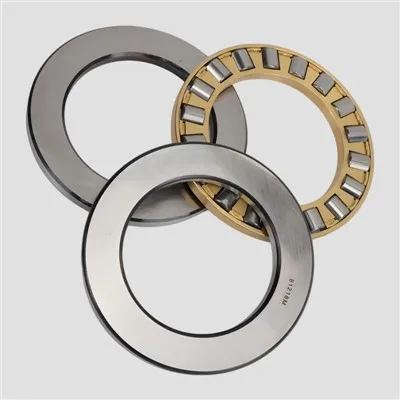
To learn more about our products and discuss your roller bearing needs, please get in touch to schedule a consultation. We’ll walk through your application, answer any technical questions, and provide a tailored quote that fits your budget and performance requirements.
References
Deep Groove Ball Bearing Harris, T. A., & Kotzalas, M. N. (2007). Rolling Bearing Analysis: Advanced Concepts of Bearing Technology (5th ed.). CRC Press.
Shigley, J. E., Mischke, C. R., & Budynas, R. G. (2004). Standard Handbook of Machine Design (3rd ed.). McGraw-Hill.
American Bearing Manufacturers Association. (2018). ABMA Standard 11: Roller Bearings – Tolerances and Boundary Dimensions. ABMA.
Yantai Wared Bearing Co., Ltd.
As one of the most professional roller bearing manufacturers and suppliers in China, we also support customized service. Please feel free to wholesale durable roller bearing made in China here and get pricelist from our factory. For price consultation, contact us.
Address: North Street, Donglai Subdistrict, Longkou, Yantai, Shandong Province, China
E-mail: postmaster@bearingzwz.com
WebSite: https://www.bearingzwz.com/
