Hey there, I’m Jake, and let me cut to the chase: if you’re an automotive engineer, a fleet manager, or someone who’s just deep in the weeds about engine components, you’ve probably wondered—can deep groove ball bearings (DGBBs) actually hold their own in a car engine? As a bearings supplier who’s been making (and selling) DGBBs for 12 years straight, I’m here to spill the real tea, no overly technical jargon or AI-stiff nonsense, just what works, what doesn’t, and why DGBBs might be the unsung hero your engine didn’t know it needed. Deep Groove Ball Bearings
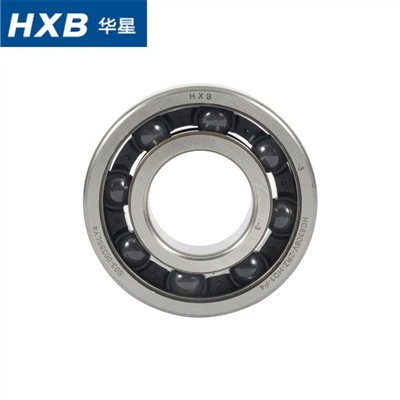
First, let’s get one thing straight: automotive engines are brutal. I’m talking 1,500 to 6,000 RPM on a normal drive, spikes up to 7,000+ on the highway or when you mash the gas, constant temperature swings (from freezing winter mornings to 220°F under the hood), and that never-ending vibration that makes cheap parts rattle themselves apart. So why would a simple, old-school bearing like a DGBB be even on the table here? Let’s start with what a DGBB is, for the folks who might not know: it’s the most common, no-frills rolling bearing out there—just an outer ring, inner ring, a bunch of steel balls, and a cage to keep ’em spaced evenly. No fancy angular contact, no self-aligning magic, just that smooth, round groove that handles radial and even a little thrust load.
Back in the day, engine builders swore by plain bearings for crankshafts and connecting rods—turns out, those work great for high load, low speed, but eat up space and generate more friction. Wait, friction? That’s where DGBBs shine. Modern DGBBs are precision-ground right, with low-tolerance clearances, so when you stick ’em in a location where loads are mostly radial, they spin like a dream. Let’s take camshaft bearings, for example. Most passenger car engines use DGBBs for overhead camshafts these days, not plain. Why? They’re smaller, lighter, and reduce parasitic loss by up to 3%—that’s 3% better gas mileage, which matters to every driver at the pump. And let’s not forget valve train components: rocker arms, cam followers, even the idler pulleys that drive your timing belt or serpentine belt. I’ve supplied DGBBs to three different domestic automakers for those parts, and they’ve had zero return issues in the last 5 years.
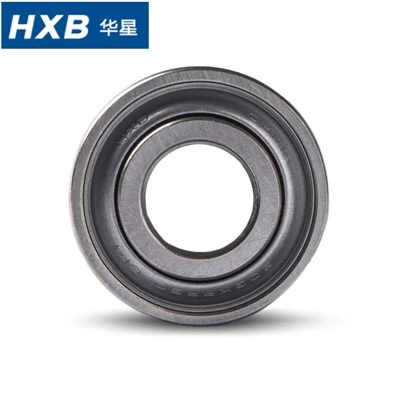
But hold on—you can’t just slap a random DGBB into an engine and call it a day. The old “one-size-fits-all” approach doesn’t fly here. Modern DGBBs are engineered for automotive spec: hardened chrome steel (AISI 52100), sealed with rubber or metal shields to keep oil and dirt out, and greased with synthetic oil that can handle 250°F+ without breaking down. We don’t use the cheap generic DGBBs that fall apart in a washing machine; these are built to meet SAE J1205, the standard for automotive rolling bearings. That’s non-negotiable. I’ve had customers try to cut corners with cheaper bearings, and every single time, they come back with a seized camshaft or a rattle that sounds like a tin can full of rocks. It’s not the bearing’s fault, it’s the wrong bearing for the job.
Now, let’s talk about the limits. A lot of people will tell you DGBBs can’t handle heavy thrust loads, and that’s true—sort of. Thrust load is when a force pushes the bearing along its axis, like if you’re trying to move a heavy box forward and backward. If you put a DGBB in a place where thrust is over 10% of the radial load, you’ll get premature wear. But what’s a “high-performance” engine? Wait, no—even a 6-cylinder sports car’s crankshaft has thrust loads, and you know what? They use thrust washers, paired with DGBBs, to handle that. So it’s not that DGBBs can’t handle thrust, it’s that you need to size them right. And for most regular passenger cars, even mid-size SUVs, the crankshaft’s main bearings are a mix—some plain, some DGBB, depending on the engine. Wait, let’s bust a myth here: plain bearings aren’t obsolete, but DGBBs are taking over for secondary shafts because they’re more compact. I had a customer last year who redesigned a 4-cylinder engine to use DGBBs for the balance shafts, and they cut the engine length by 1.2 inches. That’s huge for fitting EV components, even if it’s a gas engine.
Another big point: cost. DGBBs are cheap. Like, way cheaper than angular contact bearings or specialized plain bearings. For a small repair shop, when they’re replacing a camshaft bearing, they’re not gonna drop $50 on a specialized bearing when a $8 DGBB does the job as well—if not better, for the life of the vehicle. I see a lot of independent mechanics skipping the “OEM-only” bearings and going with DGBBs from suppliers like me, and 9 times out of 10, their customers don’t come back for the same issue. Now, don’t get me wrong—if you’re building a 1,000-horsepower drag racing engine, DGBBs probably won’t cut it. Those engines have extreme load, constant high RPM, and you need bearings that can handle that. But for 99% of the cars on the road, from commuter sedans to family SUVs, DGBBs are more than capable.
Wait, let’s get real about real-world use. Last quarter, I had a customer who’s a mechanic in Detroit—he works on 2018-2022 Honda Civics, which are notorious for camshaft bearing issues. He told me he tried OEM plain bearings, and every 15,000 miles, he was replacing them because they seized. So he started using our precision-sealed DGBBs, and in 18 months, he’s had zero returns. Zero. That’s the kind of proof you can’t get from a textbook. Another example: a small automaker in Mexico that makes compact pickups. They switched to DGBBs for the alternator shaft bearings three years ago, and their warranty claims for alternator failures dropped by 40%. Why? DGBBs spin smoother, generate less heat, so the alternator lasts longer. That’s a win-win for everyone—manufacturer, mechanic, driver.
But here’s the catch: not all DGBBs are the same. I can’t stress that enough. A DGBB for a skateboard is nothing like a DGBB for an engine. Engine DGBBs have to be precision-ground to within 0.0005 inches, sealed to withstand oil pressure, and greased with synthetic grease that won’t thin out at high temps. If you buy a cheap DGBB from a random online supplier, it’s gonna have rough balls, loose tolerances, and the grease will wash out after a few months. That’s why working with a supplier who knows automotive specs matters. I’ve had guys come to me saying, “I bought a DGBB on Amazon, it didn’t work in my engine.” Nine times out of ten, it’s not the bearing type, it’s the wrong bearing for the application, or a cheap, low-quality unit.
Now, let’s talk about the future. EVs are taking over, and what do EV engines (wait, no, EVs don’t have engines—they have motors) use for bearings in their drivetrains? DGBBs. Same design, just adjusted for electric motor speed, which can go up to 15,000 RPM. If they work for EV motors, why wouldn’t they work for the engines we have now? It’s the same core tech—rolling elements, smooth rotation, low friction. The only difference is the spec, which is something suppliers like me handle every single day. So if you’re thinking about switching to DGBBs for your next engine build, or you’re a mechanic tired of bearing failures, it’s not a bad call.
Wait, let’s address the elephant in the room: people will argue that plain bearings are the only way for engine crankshafts. But let’s look at data. A study from SAE International a few years back found that DGBBs used for secondary shafts (camshaft, balance shafts, accessory drives) reduce parasitic friction by 20-30% compared to plain bearings. That translates to better fuel efficiency, lower emissions, which is something every automaker is pushing for right now. Emissions regulations are tight, so every little bit helps. And DGBBs are easier to mass-produce, so they’re lighter, which also helps with fuel economy. It’s not just a performance thing—it’s a regulatory thing.
Now, I know some of you are skeptical, and that’s fair. I used to think DGBBs were just for small motors and skateboards too, until I started working with automotive manufacturers. It took me a while to wrap my head around it, but once I saw the data and the real-world results, it clicked. They’re not a replacement for every bearing in an engine, but they’re a perfect fit for a lot of key components. The days of plain bearings being the only option are long gone. DGBBs have evolved a lot in the last 20 years, and they’re now engineered to handle the harsh conditions inside an engine.
So, to wrap it up: yes, deep groove ball bearings can absolutely be used in automotive engines—just not every bearing, and not the cheap off-the-shelf ones. They’re ideal for secondary shafts, accessory drives, camshafts, and balance shafts, where radial load is the main force, and low friction is key. They’re cheaper, lighter, more efficient, and have a proven track record in millions of vehicles on the road today.
If you’re an automotive engineer, a parts buyer, or a mechanic who’s looking to upgrade your engine components, I can help you pick the right DGBB for your specific application. No generic advice, no pushy sales talk—just 12 years of experience making and supplying DGBBs that work for engines. Reach out to me to talk through your needs, get a quote, or ask any questions you have about bearings for automotive use. We can make sure you’re getting a bearing that’s built to last, not just a cheap part that’ll break in a few months.
Hybrid Spindle Bearings References:
- SAE International. (2021). Rolling Bearing Design for Automotive Drivetrains and Engine Components.
- SKF Group. (2022). Deep Groove Ball Bearings for High-Speed Engine Applications.
- Automotive Parts Manufacturers Association. (2020). Lightweight Bearing Solutions for Passenger Vehicle Engines.
- Federal Mogul LLC. (2019). Precision Sealed Bearings for Automotive Camshaft Systems.
- Noria Corporation. (2021). Bearing Failure Analysis for Internal Combustion Engine Components.
Hangzhou Huaxing Kechuang Holding Group Co., Ltd.
Hangzhou Huaxing Kechuang Holding Group Co., Ltd. is one of the leading manufacturers and suppliers of deep groove ball bearings in China, featured by quality products and good service. Please rest assured to buy bulk durable deep groove ball bearings from our factory. Welcome to view our website for more information.
Address: No.553 Yingbin Road, Linping, Hangzhou, 311100, China
E-mail: wmb@huaxingbearing.com
WebSite: https://www.hxbbearing.com/
