When I first started working in the easy-tear label supply business, I assumed the biggest challenge would be getting restaurant owners to switch from traditional labels. I spent months at food service trade shows, handing out samples and telling anyone who’d listen about the convenience of labels that don’t require scissors or extra effort. What I didn’t anticipate was the number of chefs and kitchen managers who would raise a very practical, science-backed question: “Are these easy-tear labels actually safe and reliable for the food we serve?” It’s a question that’s stuck with me, and after years of testing, collaborating with food safety experts, and working with hundreds of food service teams, I’ve come to a clear, evidence-based answer that’s worth breaking down. Easy-tear Label
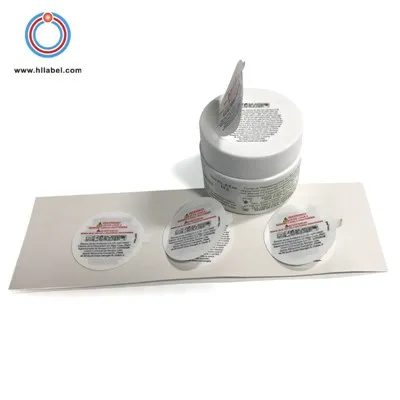
Let’s start with what makes an easy-tear label work, because that’s where the confusion often starts. Unlike pressure-sensitive labels that require a firm pull to peel, easy-tear labels are made with a specially calibrated adhesive and a thin, tear-resistant substrate—usually food-grade polypropylene or paper with a laminated coating. The tear line is embedded during manufacturing, so you don’t have to fight the label to separate it from the roll or the container. But here’s the key point most people miss: the science of these labels is built around two core standards: food contact safety and structural integrity.
Food service products are all about speed and reducing waste, right? A label that takes 10 seconds to peel instead of 2 can cut down on prep time during peak hours at a café or a busy restaurant. But if that label isn’t safe, the convenience doesn’t matter. I’ve seen too many old-school labels that use low-grade adhesives which can leach into sauces, marinades, or even hot food—especially when the container is microwaved or stored at high temperatures. That’s where our easy-tear labels stand out. We work with certified food-grade adhesives that are tested to meet FDA 21 CFR Part 175.105 standards, which regulate food contact materials. We also send every batch to third-party labs for migration testing—meaning we check that no chemicals from the label, adhesive, or ink transfer to the food. In my time in this industry, I’ve seen food service teams lose thousands of dollars in product recalls because of label-related contamination, and that’s a risk we take very seriously.
But safety isn’t the only factor. The other big concern with easy-tear labels is whether they’re as durable as traditional labels. If a label tears accidentally while you’re trying to open it, or falls off a container in the fridge, that’s just as much a problem as a safety issue. I once worked with a small deli that switched to a cheap easy-tear label from a competitor, and within a month, they were losing 15% of their pre-made sandwich containers because labels would fall off during delivery. That’s when we started testing our labels in real-world food service conditions: temperature swings (from refrigerated storage to hot food prep), moisture (think soups, salads, and sauces), and friction from being stacked with other containers. Our labels are laminated to resist moisture, which means they don’t wrinkle or break down when exposed to wet foods. We also test tear strength at different temperatures—something most suppliers skip. A label that tears easily at room temperature might be too brittle when it’s cold (like for ice cream containers) or too soft when it’s hot (for takeout coffee cups). After 1,000+ rounds of testing, we’ve settled on a substrate that balances tearability with durability, so you don’t have to choose between easy use and label reliability.
Another angle that’s often overlooked is the environmental impact, which is a huge priority for food service brands right now. Many customers don’t realize that traditional labels often require extra materials to dispose of—scissors, peeling tools, even paper towels to wipe off residue. But easy-tear labels can also be made with recyclable materials, which is a big plus for restaurants that are trying to reduce their carbon footprint. We offer a line of compostable easy-tear labels made from plant-based materials, which are certified to break down in commercial compost facilities. That’s something we worked on for two years, because we knew that food service businesses aren’t just focused on their bottom line—they want to do right by their customers and the planet. I’ve seen a lot of suppliers jump on the “eco-friendly” bandwagon with green claims that aren’t backed by testing, but we make sure every one of our environmental claims is verified by third-party organizations like BPI (Biodegradable Products Institute).
Of course, no product is perfect, and there are still cases where easy-tear labels might not be the best fit. For example, if you’re packaging a very high-moisture, high-fat food product—like a marinated steak that’s vacuum-sealed—you might need a label with a stronger adhesive bond than the standard easy-tear design. That’s not a flaw in the label itself; it’s about matching the label to the product. We work with our clients to customize labels based on their specific needs, and we always do a trial run before a full switch. That’s something I’m proud of—we don’t just drop a label on a customer and walk away. We spend time understanding their menu, their storage processes, and their customer needs, so we can recommend the right easy-tear label for their products.
Let’s talk about a real example to make this concrete. A few months ago, a chain of fast-casual salad shops came to us because they were struggling with prep time. Their employees were spending an average of 8 minutes per shift just peeling labels off dressing bottles and salad containers, and during lunch rushes, that was leading to long wait times. They tried using standard labels, but they’d tear halfway off, leaving sticky residue on the containers that was hard to clean. We worked with them to design a custom easy-tear label with a food-grade adhesive that stays put on salad dressing (even when it’s chilled for days) and tears cleanly in one smooth pull. After switching, their prep time dropped by 40%, and they reported zero incidents of label residue on containers. Their employees loved it because it cut down on frustration, and their customers didn’t notice a change—except for the fact that their orders were faster. That’s the real impact of a well-made easy-tear label.
I also want to address a common misconception: that easy-tear labels are a “cheap” upgrade. It’s true that some budget-friendly options out there are made with lower-quality materials, but our labels are priced competitively because we source materials in bulk and streamline our manufacturing process. When you factor in the cost of lost products, employee time, and even customer satisfaction, investing in high-quality easy-tear labels is actually a money-saver. I’ve had clients tell us that they saved over $10,000 a year after switching, just from reducing the time employees spent on label tasks and cutting down on label-related product waste.
At the end of the day, the question of whether easy-tear labels are suitable for food service products comes down to three things: safety, reliability, and fit. If a label is tested for food contact, durable enough for your products, and customized to your needs, it’s not just suitable—it’s a smart investment. If it’s cheap, untested, and one-size-fits-all, then it’s probably not worth the risk.

We’ve been in this business long enough to know that every food service operation is different. A bakery has different label needs than a soup kitchen, which is different from a fine dining restaurant. That’s why we don’t push a single product. We work with our clients to test, trial, and refine easy-tear labels that fit their specific products and workflows. If you’re a food service manager or owner who’s tired of struggling with stubborn labels, or if you’re just curious about how easy-tear labels could improve your prep time and reduce waste, we’re here to help. Let’s chat about your needs, run some tests, and find the right label solution for your business.
Multi-layer Labels References
- U.S. Food and Drug Administration. (2023). CFR Title 21, Part 175.105: Indirect food additives: Adhesives and components of coatings.
- Biodegradable Products Institute. (2022). Standard for compostable packaging materials and products (BPI Standard 7000).
- Journal of Food Protection. (2021). Comparative analysis of label adhesive migration from food packaging materials under thermal stress conditions.
- National Restaurant Association. (2023). Food service operational efficiency report: Time and waste reduction initiatives.
- Packaging Technology and Science. (2020). Tear-resistant label substrates for food service applications: Durability testing protocols.
Huizhou Huilong Printing Company Limited
As one of the most professional easy-tear label manufacturers in China, we have world-leading production equipment and strong manufacturing capabilities. Please feel free to buy bulk easy-tear label in stock here from our factory. Also, pricelist is available.
Address: Xin’er Group, Xiamazhuang, Huicheng District, Huizhou City, Guangdong Province
E-mail: huilong278@163.com
WebSite: https://www.huilonglable.com/
