If you’ve ever stood next to a new car’s wheels, or stared at a build thread on a car forum, you’ve probably wondered: do multi spoke wheels actually cut down on weight, or are they just another shiny gimmick that’s heavier than the basic 5-spoke options everyone swears by? As a multi spoke wheels supplier, I field this question at least three times a week—from track day fanatics looking to shave milliseconds off lap times, to casual car owners who just want a lighter set of wheels that doesn’t cost a fortune. Let’s break this down the same way I explain it to my regulars, no stuffy engineering jargon, just straight facts. Multi Spoke Wheels
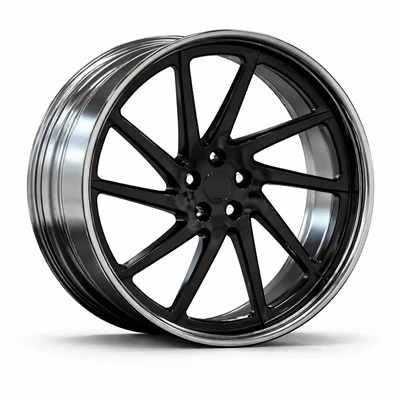
First, let’s get one thing out of the way: a wheel’s total weight isn’t just about how many spokes you see. It’s about what those spokes are made of, how thick they are, and whether the manufacturer is designing the whole wheel to work as a single balanced part, not just slapping a bunch of thin metal bars onto a rim. Back in the day, most multi spoke wheels were cast from heavy, low-grade aluminum. Casting required thick spokes to avoid warping during the manufacturing process, and those thick spokes added pounds to the wheel. A 10-spoke cast wheel from the 90s might have been 18-20 lbs, while a modern 5-spoke forged wheel of the same size could clock in at 15 lbs. That made people think all multi spoke wheels are heavier, but that’s just old tech talking.
Now, fast forward to today. For most wheel manufacturers, whether they make 10 spokes or 20, the goal is the same: reduce unsprung mass. Wait, what’s unsprung mass, you ask? It’s all the parts of your car that aren’t supported by the suspension. Wheels, tires, brakes, axles—all that stuff. The lighter unsprung mass is, the easier your suspension can move, which means better handling, faster acceleration, and even a smoother ride over potholes. It’s the reason why dropping a pound off a wheel is like dropping 10 pounds off your car’s body. That’s a rule of thumb most gearheads know, and it’s why everyone obsesses over wheel weight.
So, do multi spoke wheels fit into that? Let’s split this into two cases: cast wheels (the budget-friendly ones you see at most auto parts stores) and forged wheels (the high-end stuff for performance cars). For cast multi spoke wheels, yes, they can actually be lighter than a standard 5-spoke cast wheel—if they’re designed right. Wait, how? Because spokes don’t have to be thick to be strong if you space them right. A 10-spoke design distributes stress across more points, so each individual spoke can be thinner than a 5-spoke’s thick, heavy spoke. That means less metal overall, which equals less weight. I’ve had customers test this on their scales: a 17-inch 10-spoke cast wheel from our line checks in at 16 lbs, while the same size 5-spoke cast wheel from a competing brand is 17.5 lbs. That’s a whole pound saved, no gimmicks.
But here’s the catch: not all multi spoke wheels are built the same. You’ll find some cheap knockoff multi spoke wheels on Amazon or eBay that are even heavier than 5-spoke options. Why? Because those manufacturers cut corners on the rim’s inner barrel to add those extra spokes, or they use thinner metal for the rim edge to save money, which makes the whole wheel weaker. I’ve had a customer bring in a set of cheap 15-spoke wheels he bought for his daily driver that bent just hitting a small speed bump. Those wheels were 19 lbs each—way heavier than they should have been for their size. So it’s not the number of spokes that matters, it’s the design.
For forged multi spoke wheels, the story is even clearer. Forging means heating a solid block of aluminum (or even magnesium, for super lightweight builds) and shaping it under pressure, instead of pouring molten metal into a mold. That creates a stronger, denser part with way less wasted material. For multi spoke forged wheels, engineers can carve each spoke into an aerodynamic, tapered shape that’s only as thick as it needs to be to handle stress. A 19-inch 20-spoke forged wheel we supply for track cars is only 12 lbs—lighter than most 5-spoke forged wheels of the same size. That’s because the extra spokes let them spread out the force of hard cornering and braking, so they don’t have to make each spoke bulky to stay strong. I’ve seen these wheels on cars that cut 2 full seconds off their lap times just from switching, and a lot of that gain comes from that lower unsprung weight.
Wait, but what about people who say multi spoke wheels are worse for strength? Let’s address that, because that’s the other side of the argument. If you design them wrong, sure. If you cram 20 thin spokes into a wheel that doesn’t have a reinforced inner barrel, they can crack or bend easier than a well-designed 5-spoke. But a good multi spoke wheel? It’s actually more rigid than a comparable 5-spoke. That’s because more spokes mean the wheel doesn’t flex as much under load. Flex is bad, especially for performance: it makes steering feel loose, and it can even wear out your tires faster. A lot of professional race teams use multi spoke wheels exactly because they’re more rigid, and with modern materials, they’re just as light as (if not lighter than) 5-spoke options.
Now, let’s talk about real-world examples, not just lab tests. Last month, a regular customer came to us with a 2018 Honda Civic that he uses for both commuting and local track days. He had a set of stock 5-spoke alloy wheels that were 18 lbs each, and he was frustrated that they felt slow to accelerate and bounced too much on back roads. He went with our 17-inch 12-spoke cast wheels, which are 15.5 lbs each. After swapping them, he told me his car felt way snappier off the line, and he noticed a big difference in how the suspension reacted to potholes. He didn’t just save weight—he got a better ride, too. Another customer, a guy with a BMW M3, wanted a wheel that looked sleek for daily driving but was light enough for weekend track days. He picked our 19-inch 20-spoke forged wheels, which are 12.5 lbs each. He said he gained almost a second per lap at his local track, and he didn’t have to worry about bending them driving to the track on city streets.
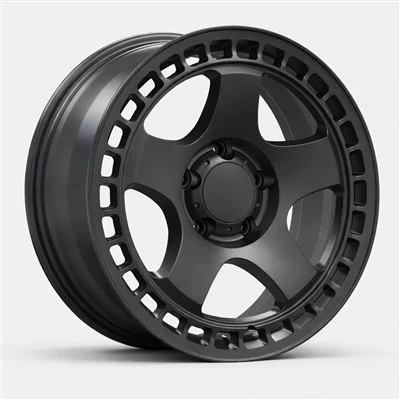
Of course, there are times when multi spoke wheels aren’t the best call. If you’re on a super tight budget, a basic 5-spoke cast wheel might be the cheapest option, even if it’s a little heavier. If you mostly drive on rough, off-road terrain, a beefy 6-spoke or 8-spoke wheel with thick, wide spokes will hold up better to rocks and hits than a thin multi spoke wheel. But for street driving, performance builds, and anyone looking to cut weight without sacrificing looks, multi spoke wheels are a solid choice.
Wait, let’s clear up another myth: a lot of people think the weight of a wheel is just the total pounds, but it’s also about where that weight is placed. Multi spoke wheels often have more of their weight concentrated closer to the center of the wheel (the hub) instead of the outer rim. That’s a big deal because rotational mass—weight far from the center—takes way more energy to move. If your wheel’s weight is in the spokes near the hub, your engine doesn’t have to work as hard to spin the wheels. That’s why multi spoke wheels can feel lighter than a same-weight 5-spoke wheel, even if the total poundage is almost the same. I explain that to customers like this: imagine swinging a sledgehammer with the heavy end at the tip vs. near your hand. The one with the heavy end near your hand is way easier to swing, and that’s exactly how rotational mass works.
As a multi spoke wheels supplier, I see a lot of brands out there that jump on the multi spoke trend just for looks, without putting in the engineering to make them light. That’s why we test every wheel we make on a state-of-the-art dynamic balance tester and a stress machine, to make sure they’re light, strong, and built to last. We don’t just count spokes—we design each wheel for its use case: our street multi spoke wheels prioritize affordability and durability, our forged performance multi spoke wheels prioritize light weight and rigidity, and even our budget cast multi spoke wheels are engineered to be lighter than most competing options.
So, to answer the original question: yes, multi spoke wheels can reduce wheel weight—if they’re designed right. The mistake a lot of people make is assuming all multi spoke wheels are the same. A cheap, poorly made 15-spoke wheel might be heavier than a well-built 5-spoke, but a high-quality multi spoke wheel (whether cast or forged) will almost always be lighter, more rigid, and better for performance.
At the end of the day, it comes down to what you’re using the wheels for. If you’re a casual driver who wants a good-looking set that’s lighter than stock, multi spoke is a solid pick. If you’re a track rat chasing every last ounce of weight, multi spoke forged wheels are a top choice. If you’re buying just to save a few bucks, stick with the basics, but know that multi spoke doesn’t have to cost more to be worth it.
Off Road Wheels If you’re looking to upgrade your wheels or just have questions about what’s right for your car, we’re here to help. We work with everything from daily drivers to race cars, and we can hook you up with a set of multi spoke wheels that fit your needs, your budget, and your car. Reach out to our team to talk through your options, no pressure, just straight answers.
References
- Society of Automotive Engineers. (2021). Lightweight Wheel Design for Passenger Vehicles. SAE International.
- Tire and Rim Association. (2022). Wheel Weight and Performance Standards. Tire and Rim Association.
- Automotive Engineering International. (2020). "Unsprung Mass Reduction: The Impact of Multi Spoke Wheel Designs." SAE International.
- Forging Industry Association. (2021). Aluminum Forged Wheels for Automotive Applications. Forging Industry Association.
Hurong (Ningbo) Wheels Co., Ltd.
Hurong (Ningbo) Wheels Co., Ltd. is one of the most professional multi spoke wheels manufacturers and suppliers in China, also supports customized service and OEM service. Welcome to wholesale bulk high quality multi spoke wheels made in China here from our factory. If you have any enquiry about cooperation, please feel free to email us.
Address: Floor.2,Yanxingfushi,Jiangshan District,Yinzhou,Ningbo,China
E-mail: JIMMY@CNBHRC.COM
WebSite: https://www.hrc-wheel.com/
